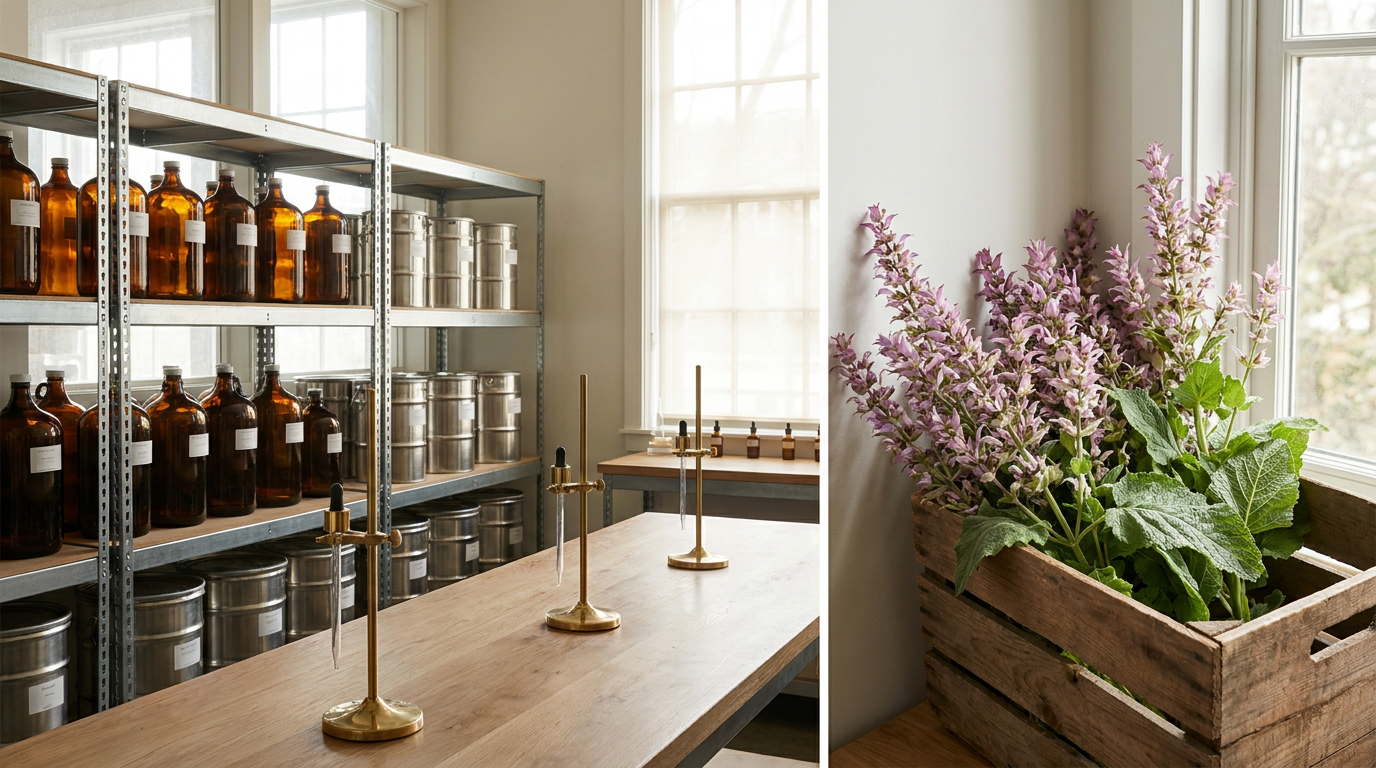
In perfumery, clary sage works from the middle to the base of a composition, lending body without dominating the notes stacked above it. This page is part of our Guide to Buying Clary Sage Essential Oil in Bulk.
Order a trial size and compare it against the bulk pound pricing on the bulk order page.
The oil's linalyl acetate content is what gives it that soft, rounded quality rather than a sharp herbal edge, a chemistry covered in detail here for formulators who want to understand what they're smelling before they buy.
The muscatel note in classic and modern perfumery traces clary sage's use as an anchor note going back to its winemaking history, and how to anchor a perfume blend with a clary sage base note walks through practical ratios for a working formulation.
Perfumers typically dilute clary sage into an ethanol or carrier base at a small fraction of the total formula, since a base note is meant to be felt more than smelled directly. Comparing clary sage against ylang ylang is a useful exercise for anyone deciding which base note a new composition actually needs.
The recurring mistake among newer formulators is treating clary sage like a top note and adding it early and heavy, which flattens the composition instead of giving it depth; it works best added last, in small increments, against a finished skeleton of top and heart notes.
Formula development typically runs on 1 oz to 4 oz bottles, with production-scale batches moving to 5 lbs and 25 lbs once a formula is finalized.
Contact us for the current batch's documentation before you buy at volume.