A biennial. Worth the wait.

Our Oil

Clary sage gives one harvest for two years of field. We buy that harvest from the farmers who waited for it and distil it ourselves.

Biennial Two Years, One Cut
France Organic French Fields
In-House Our Still, Our Charge
3 yr Lot Traced

Why This Oil Costs What It Costs

Clary sage is a biennial, which means a field spends its first year producing nothing you can sell.

The plant puts that first season into roots and a rosette of leaves. Only in the second year does it throw up the tall flowering stems that carry the oil, and then the field is finished. One cut for two years of ground, weeding and risk.

That arithmetic is the whole reason cheap clary sage should worry you. When a bottle undercuts the crop economics by a wide margin, something has usually been stretched. We buy the real harvest, from organic growers in France, and run it through our own still.

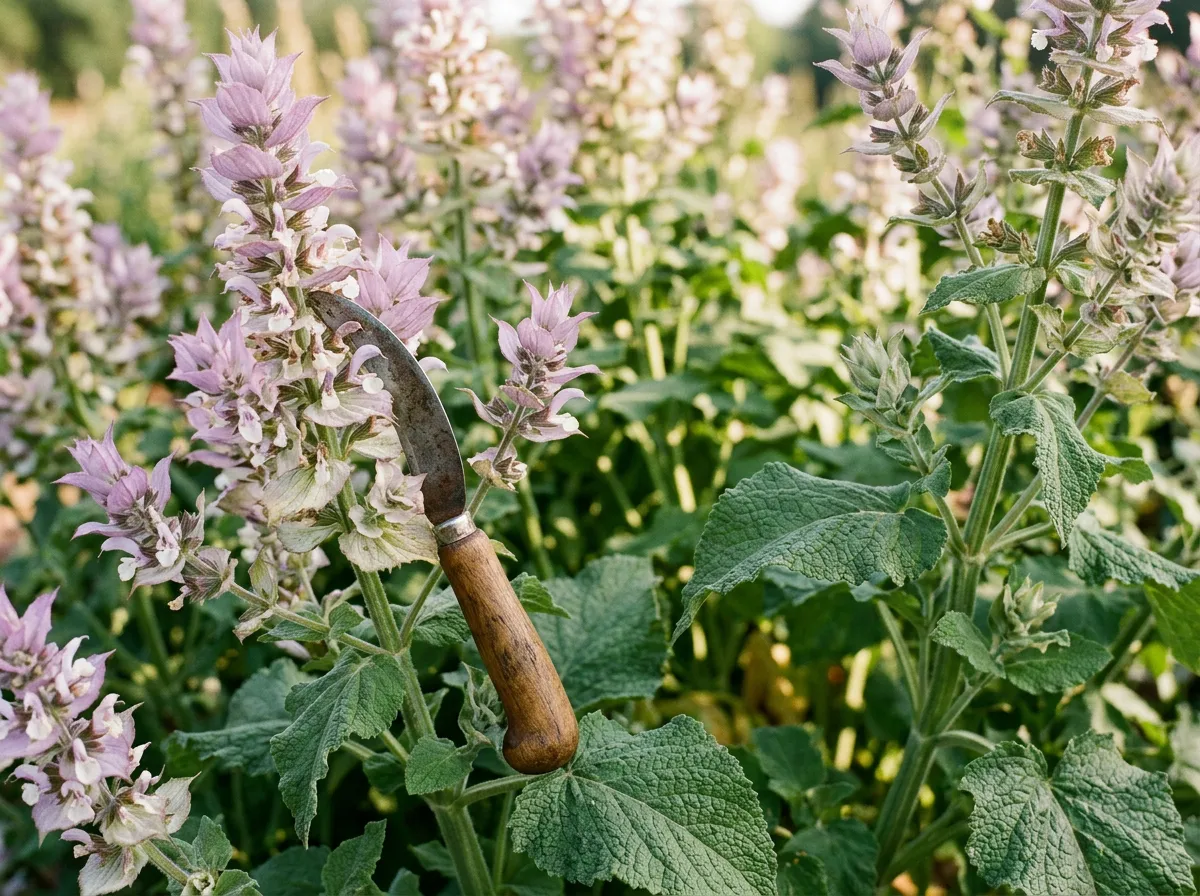
Tall clary sage flowering stems with lilac bracts standing in a French field

Tall Stems, Cut in Full Flower

Salvia sclarea is unmistakable in the second year: waist-high stems carrying pale lilac bracts that look almost papery, over broad textured leaves.

The flowering tops are what we want. We take the whole flowering stem while the bracts are still bright, because that is when the aromatic content peaks and the sweet, dry, nutty character is most pronounced.

Historically this plant was a winemaker's companion, valued for the muscatel note its sclareol lends. That association tells you something about how distinctive the aroma is before you have even opened a bottle.
Sensible Limits

We make no health claims here. Clary sage has a long history in perfumery and traditional use, and that is the ground we will stand on.

Bring it down in a carrier oil first, and try it on a small area of skin before wider use. Clary is generally gentle, but it is unusually relaxing to sit with, so it is not the oil to reach for before driving.

Avoid it during pregnancy, and a poor harvest is a reason for us to be out of stock rather than a reason to buy oil we cannot vouch for.

Ours to Answer For

Nothing here is bought as a finished product. On a material this easy to extend, owning the still is not a small distinction.

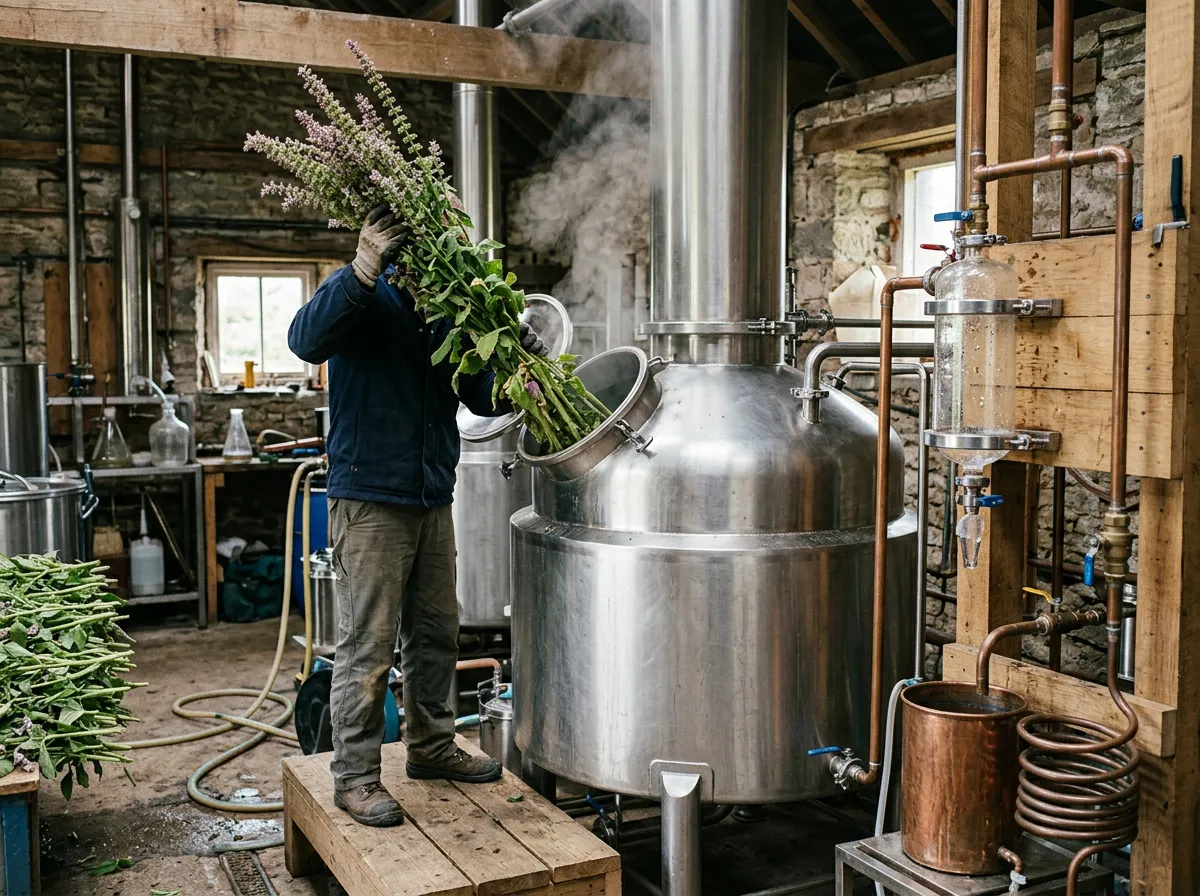
The cut stems are packed whole, steam is passed through, and the aromatics come over with the vapour to be separated as they cool. Clary rewards patience: the sweeter, rounder fractions arrive later in the run.

So we take the run to its end rather than stopping at a convenient volume. Cutting it short would leave the best of the oil in the plant material.

Clary sage flowering stems loaded into a still in a small distillery

Checked Against What Clary Should Be

Every batch is analysed by an independent third-party laboratory before it is bottled.

Linalyl acetate and linalool

The pair that dominates genuine clary sage. Their ratio is the fastest way to spot a stretched oil.

Sclareol

The constituent behind the muscatel character, and a marker of properly distilled second-year material.

Added synthetics

Screens for lab-made linalyl acetate, the usual way a thin clary oil is made to smell convincing.

Name your lot and its analysis is yours, either by email or through the contact page.

Both Dates

Stamped with the day it was distilled, the day it was filled, and the lot behind both.

Amber Glass

The whole size range ships amber, sample bottles included.

Nothing Extended

Pure Salvia sclarea, undiluted, with no synthetic esters topped up.

Two Years in a Small Bottle

Second-year flowering stems from organic French fields, distilled to completion in our own still, with the ester ratio confirmed by an outside laboratory.

Try the sample size first.

Shop Clary Sage Oil
These statements have not been evaluated by the FDA. Products are not intended to diagnose, treat, cure, or prevent any disease.