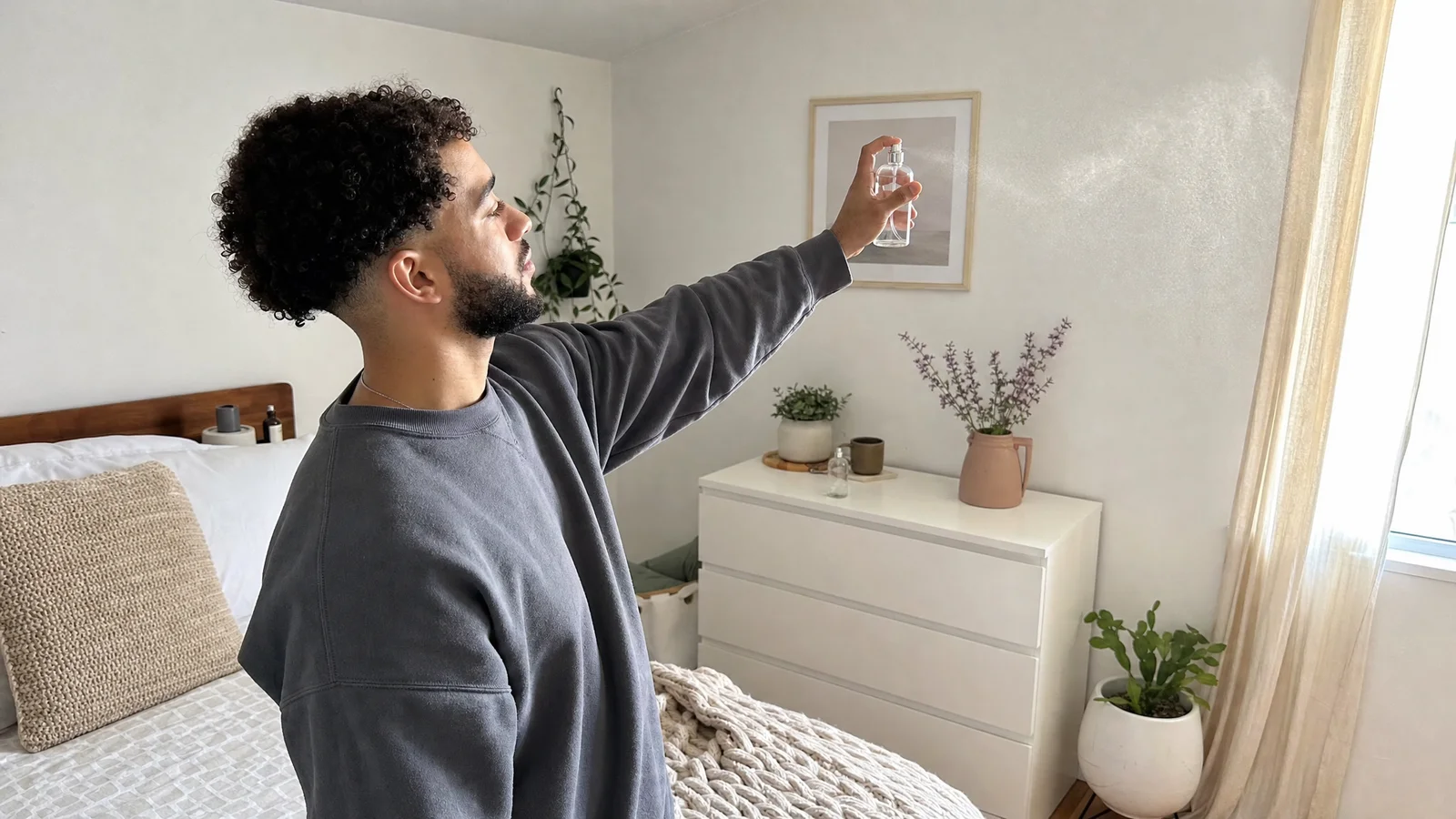
A Clary Sage Room Spray That Actually Mixes
The classic room spray recipe is a few drops of oil in a bottle of water. It sounds simple and it does not quite work, because oil does not dissolve in water. What comes out of the nozzle is mostly water or, after a shake, a splash of concentrated oil. A better clary sage room spray starts with alcohol, which actually carries the oil, and here is a 100 ml version worked out at 1%.

Clary Sage Essential Oil
Our own Clary Sage Essential Oil, in sizes from 0.5 oz to bulk.
From $19.99
Shop Now →How much oil
A room spray lands on fabric, furniture and sometimes skin, so we keep it modest. The Tisserand retail page for clary sage gives 2 drops per 10 ml of blending oil for facial blends and up to 5 drops per 10 ml for body blends, which at the common 20 drops to the millilitre is roughly 1% and 2.5%. Our own skin guidance is 0.5% to 2%, and 1% sits at the cautious end of all of those figures. The European Food Safety Authority's 2024 opinion (written for animal feed) says clary sage oil should be considered an irritant to skin and eyes and a dermal and respiratory sensitiser, which is another reason to keep it light.
In weight terms, 1 ml of the batch on our certificate weighs about 0.892 g (relative density 0.892 at 20 C), so 1% of 100 ml is 1 ml, about 0.89 g, or roughly 20 drops. Another lot will differ a little.
The alcohol version
| Ingredient | Amount | Notes |
|---|---|---|
| Perfumer's or denatured ethanol | 99 ml | From a perfumery-supplies or craft-chemical seller |
| Clary sage essential oil | 1 ml (about 20 drops) | A single oil, to keep the scent clear |
Combine in an amber glass bottle with a spray top, label it with the date and contents, and keep it away from flame and heat. With no water in the bottle there is nothing for microbes to grow in, which is why we start here. Alcohol is flammable, it smells of alcohol for the first minute or two, and it can mark finished wood, some plastics and delicate fabrics, so test a hidden corner first.
A water-based version
Water-based sprays need two more ingredients: a solubilizer, a surfactant that disperses the oil in water, and a preservative, because anything with water in it can grow microbes. The ratios depend on the products you choose, so follow the maker's instructions for both. If you cannot find them, the alcohol spray is the easier route.
Using it well
- Spray toward fabric and air, away from faces. One spritz at arm's length, then leave the room for a few minutes.
- Keep it off bedding and pillows, where it would work like a leave-on skin product.
- Keep the alcohol version away from lit candles, stoves and hot lamps.
- Keep the bottle capped and out of the light, and make small batches; our storage guide has the details.
We advise avoiding clary sage oil during pregnancy, and it is not the oil to reach for before driving. The Tisserand page adds children under 3. If anyone at home has fragrance allergies or asthma, check with a dermatologist or allergist before introducing a new scented spray. Pets are a question for your veterinarian: we do not have pet-safety data for our oil, and our posts on cats and dogs explain what to ask.
What it is for
It scents a room. Clary sage smells sweet, dry and softly herbal with nutty, tea-like undertones, and it pairs well with lavender, bergamot, geranium, sandalwood and vetiver (see our pairing guide). If you sell room sprays, keep the label to the scent, since the FDA treats a fragrance marketed with claims such as helping someone sleep as a drug and not a cosmetic. If you would rather diffuse, our inhalation guide compares the options.
One millilitre of oil, ninety-nine of ethanol and a good spray top make a bottle of soft, dry, herbal scent that mixes properly.
Clary Sage Essential Oil
Clary Sage Essential Oil from our own shop, in sizes from 0.5 oz to bulk.
From $19.99
Shop Now →Sources & Further Reading
- EFSA FEEDAP Panel, 2024. Safety and efficacy of a feed additive consisting of an essential oil derived from the flowering stems of Salvia sclarea L. pmc.ncbi.nlm.nih.gov/articles/PMC11561422
- Tisserand Essential Oils. Clary Sage Essential Oil, safety information. tisserand.com
- US FDA. Is It a Cosmetic, a Drug, or Both? (Or Is It a Soap?). fda.gov