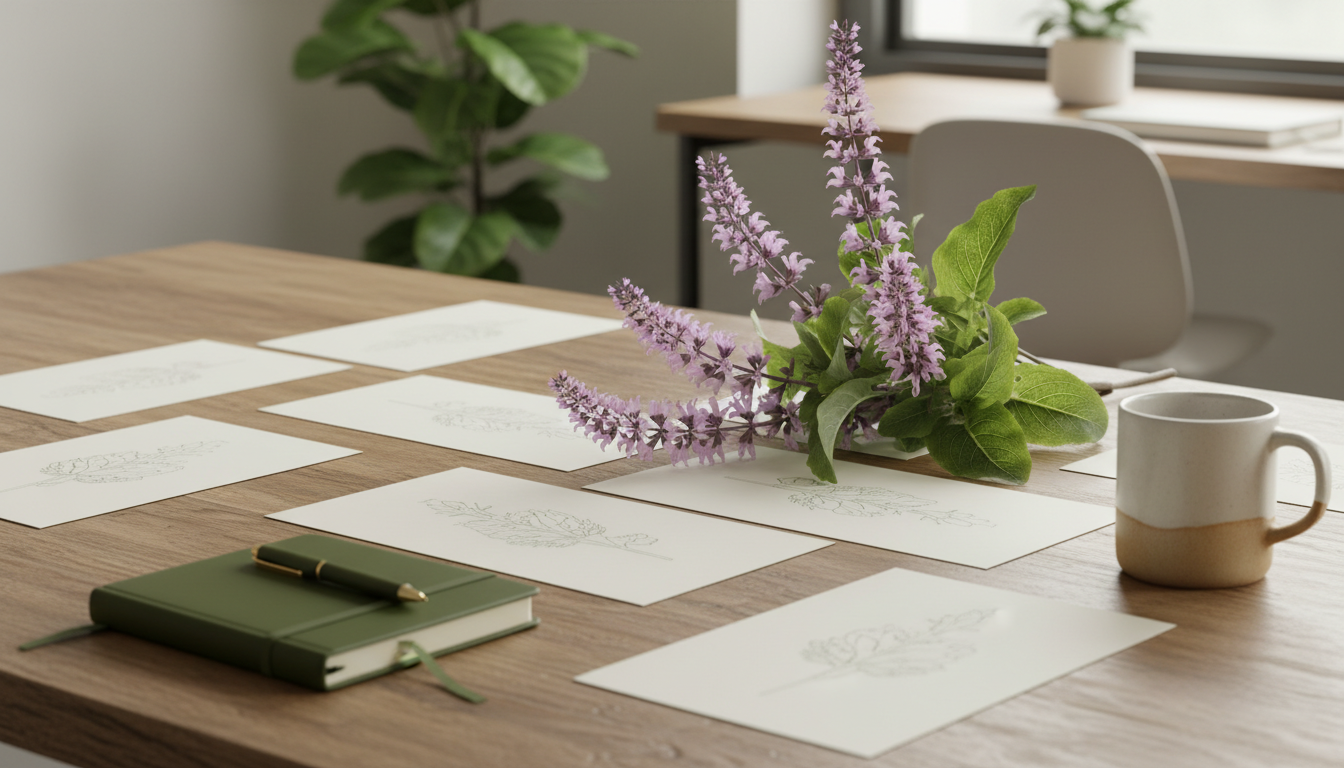
Clary Sage Essential Oil Uses: The Ultimate Guide for Home and Self-Care
Key Takeaways
- Clary sage essential oil is steam-distilled from Salvia sclarea and carries a warm, earthy-herbaceous scent with subtle floral and slightly sweet undertones.
- Its most popular uses span aromatherapy diffusion, topical skincare, hair care, DIY home sprays, and personal fragrance blending.
- Proper dilution in a carrier oil is essential before any skin contact. A standard 1 to 2 percent dilution is a reasonable starting point for most adults.
- Clary sage blends beautifully with lavender, bergamot, cedarwood, sandalwood, frankincense, and citrus oils.
- Always patch-test before applying to larger skin areas, and consult a qualified healthcare provider before use during pregnancy or alongside any medical management.
- Quality matters: look for oils labeled with the Latin name Salvia sclarea, country of origin, and GC/MS testing documentation.
Few essential oils occupy quite the same space as clary sage. It is herbal without being sharp, floral without being sweet, and complex enough to anchor a blend or stand quietly on its own. People reach for it in the morning to open a focused work session and again at night to soften the transition into a slow, unhurried evening. That kind of versatility is rare.
This guide covers every significant way clary sage essential oil is used at home and in personal care, from diffuser blending to scalp massage to linen sprays. It is written for people who want practical, honest information: what the oil actually smells like, where it fits into a daily routine, how to use it safely, and what to look for when you are choosing a bottle.
All uses described here are cosmetic, aromatic, or for general well-being routines. This guide does not make medical claims, and it should not be read as medical advice.
What Is Clary Sage Essential Oil?
Clary sage essential oil is steam-distilled from the flowering tops and leaves of Salvia sclarea, a biennial or short-lived perennial native to the Mediterranean basin and parts of Central Asia. It is a distinct plant from common culinary sage (Salvia officinalis), and the two oils are not interchangeable in either scent or chemistry.
The name "clary" likely derives from the Latin clarus, meaning clear or bright, a reference to the plant's historical use in European folk traditions. Commercially, the largest producing regions today include France (particularly Provence), Russia, Bulgaria, and Morocco. Each origin can yield a subtly different aromatic profile, which is one reason sourcing transparency matters when you are choosing an oil.
What Does Clary Sage Smell Like?
The scent is warm, slightly musky, and herbaceous with a soft, hay-like sweetness underneath. Think of dried meadow grass warmed by afternoon sun, with a faint floral edge and an earthy depth that keeps it from reading as a light or airy oil. It is grounding without being heavy.
Compared to common sage, clary sage is far less medicinal and sharp. Many people who find common sage overwhelming discover they find clary sage easy to live with. It works beautifully at low concentrations and does not dominate a room the way eucalyptus or peppermint can.
Key Aromatic Compounds
Understanding a little of the chemistry behind an oil helps explain why it performs the way it does in blends and on skin. The primary compounds in Salvia sclarea oil include:
| Constituent | Typical Range | Aromatic Character |
|---|---|---|
| Linalyl acetate | 50 to 75% | Floral, slightly fruity, smooth |
| Linalool | 10 to 25% | Soft floral, lavender-adjacent |
| Germacrene D | 1 to 5% | Woody, earthy, subtle |
| Sclareol | trace to 3% | Musky, deep, fixative-like |
| Alpha-terpineol | 1 to 4% | Lilac-like, mildly floral |
The high linalyl acetate content is largely responsible for clary sage's smooth, slightly fruity-floral character and its blending compatibility with lavender (which also contains substantial linalyl acetate and linalool). Sclareol, even in trace amounts, gives the oil its characteristic musky depth and acts almost like a natural fixative in blends.
Aromatherapy and Diffuser Uses
Diffusing is probably the single most common entry point for people new to clary sage essential oil. It requires no dilution math, no skin preparation, and the aromatic effect is immediate and room-filling. More importantly, diffused clary sage has a presence that shifts the feel of a space in a way that is hard to replicate with synthetic air fresheners.
What to Expect When You Diffuse Clary Sage
People who diffuse clary sage regularly often describe the experience as grounding. The warm, slightly sweet herbal scent settles a room rather than energizing it, which makes it a natural choice for late-afternoon wind-down sessions, evening reading time, or any moment when you want an atmosphere of quiet focus rather than stimulation.
Some aromatherapy educators position clary sage on the spectrum between uplifting and sedating: it tends to soften mental noise without producing the heavy, drowsy quality associated with some resinous oils. Anecdotal evidence from home diffuser users suggests it may help promote a sense of calm ease during stretched-out, low-stimulus evenings. That said, individual responses to aromas vary considerably.
Diffuser Ratios and Timing
A standard 100 ml ultrasonic diffuser typically works well with 3 to 5 drops of clary sage. For a 200 ml diffuser, 5 to 8 drops is a reasonable starting point. Running a diffuser in 30 to 45-minute intervals rather than continuously allows the scent to remain pleasant without becoming fatiguing.
Clary sage is potent. Start at the lower end of any suggested drop count, especially in smaller rooms. More is not always better with essential oils in diffusion.
Clary Sage Diffuser Blends
The oil's linalyl acetate backbone makes it a natural blending partner for a wide range of other oils. Below are four tried-and-tested diffuser combinations:
- Soft Evening Blend: 3 drops clary sage, 3 drops lavender, 2 drops cedarwood. Warm, woody, and deeply calm.
- Herbal Study Blend: 3 drops clary sage, 2 drops rosemary, 1 drop lemon. Grounded but gently alert.
- Forest Floor Blend: 2 drops clary sage, 3 drops frankincense, 2 drops vetiver. Rich and resinous for quiet evenings.
- Citrus Sage Blend: 3 drops clary sage, 3 drops bergamot, 1 drop ylang ylang. Bright, slightly floral, and uplifting.
For a much deeper look at diffuser pairings and seasonal combinations, see our guide to clary sage diffuser blends for a relaxing evening atmosphere.
Clary Sage Oil Uses in Skincare
When it comes to cosmetic skincare, clary sage essential oil has a meaningful place in formulation and in simple at-home rituals. Its aromatic complexity adds a beautiful dimension to facial oils and creams, and some of its constituents have been the subject of preliminary cosmetic research.
Important: Essential oils must always be properly diluted before skin contact. Undiluted ("neat") application of clary sage to skin is not recommended. A standard adult dilution is 1 to 2 percent in a suitable carrier oil. Patch-test before wider application. If you have sensitive skin or any existing skin concerns, consult a dermatologist before introducing new topical ingredients.
Clary Sage in Facial Oils and Serums
Clary sage is commonly incorporated into face oils targeting combination or oily skin types. Some cosmetic formulators note that the oil's linalool content may support a balanced-looking complexion, and the overall aromatic richness adds a sensory dimension that elevates a simple jojoba or rosehip oil base into something that feels intentional.
A basic DIY facial oil might look like this:
- 30 ml rosehip seed oil as a base
- 4 drops clary sage essential oil (approx. 0.6 percent dilution)
- 3 drops frankincense essential oil
- 3 drops lavender essential oil
Apply 2 to 3 drops to clean, slightly damp skin in the evening. This dilution sits at a gentle, cosmetically appropriate level for most adult skin types.
In Clay Masks and Exfoliating Blends
Adding 1 to 2 drops of clary sage essential oil to a pre-made kaolin or bentonite clay mask can add an aromatic depth and may contribute to the overall skin-feel experience. Because the clay itself acts as a diluting medium, the concentration reached in a typical one-teaspoon mask serving is generally very low. That said, still patch-test and rinse thoroughly.
Clary Sage in Body Lotions and Balms
The warm, musky quality of clary sage makes it a pleasing addition to unscented body lotions or body butters. A 1 percent dilution in a 100 ml lotion (approximately 20 drops per 100 ml) is a standard cosmetic benchmark for leave-on body products. Clary sage pairs especially well with vanilla-adjacent bases, sandalwood-infused products, or simple shea butter formulations.
Clary Sage for Hair and Scalp Care
Hair and scalp care is one of the more underappreciated areas for clary sage essential oil uses. The scalp is skin, and the same principles of diluted topical use apply here. When correctly incorporated into a scalp oil or added to an unscented shampoo, clary sage can elevate a basic hair routine into a genuinely pleasurable weekly ritual.
Scalp Massage Oil
A pre-wash scalp oil with clary sage is a popular choice in the aromatherapy hair care community. The ritual itself is beneficial: massaging oil into the scalp improves circulation, and the aromatic diffusion during a warm towel wrap or steam session adds a sensory experience that feels indulgent.
A simple scalp oil blend:
- 2 tablespoons jojoba oil
- 1 tablespoon castor oil
- 4 drops clary sage essential oil
- 3 drops rosemary essential oil
- 2 drops cedarwood essential oil
Massage gently into the scalp using fingertips (not nails). Leave on for 20 to 60 minutes before shampooing. This creates an approximately 1.2 percent dilution, appropriate for a rinse-off scalp product for most adults.
Adding Clary Sage to Shampoo or Conditioner
A simpler entry point is adding 2 to 4 drops of clary sage essential oil per tablespoon of an unscented shampoo or conditioner base. This creates a low, rinse-off concentration that is unlikely to cause issues for most people and adds a subtle, pleasant aroma to the wash experience.
Avoid getting any essential oil blend directly into the eyes. If irritation occurs, rinse thoroughly with water and discontinue use.
Hair Rinse
Some natural hair care enthusiasts add clary sage to a dilute apple cider vinegar rinse used after shampooing. Because the rinse is further diluted and fully rinsed out, the concentration of essential oil reached on the hair shaft and scalp is very low. It primarily adds aroma and a slightly spa-like dimension to an otherwise functional step.
DIY Home and Atmosphere Uses
Beyond the diffuser, there are several creative ways to bring clary sage essential oil into the home as part of a mindful, natural living approach. These uses focus on atmosphere, scent, and the sensory quality of the space rather than any wellness claim.
Room and Linen Sprays
A clary sage room spray is one of the most satisfying DIY projects for essential oil beginners. It requires almost no equipment, produces immediate results, and can be customized endlessly. The basic formula is simple: water, a dispersant (such as witch hazel or a small amount of alcohol), and your chosen oils.
A basic formula for a 100 ml room spray:
- 80 ml distilled water
- 20 ml witch hazel (or high-proof vodka as an emulsifier)
- 15 drops clary sage essential oil
- 10 drops lavender essential oil
- 5 drops bergamot essential oil
Combine in a dark glass spray bottle, shake well before each use, and mist into the air or lightly over linens (test on an inconspicuous area first to ensure no staining). Shake before every use because oil and water do not stay emulsified without a proper surfactant.
For a fully detailed recipe with variations and storage guidance, see our DIY clary sage room spray guide.
Candle and Wax Melt Blending
Clary sage pairs beautifully with soy wax candle bases. It is not a particularly strong top note, so it tends to work best blended with brighter citrus or floral notes that carry into the initial scent throw, with clary sage providing warm depth in the heart and dry-down. A blend of clary sage, orange, and patchouli in a soy candle creates a rich, slightly bohemian atmosphere that works well in living rooms and bedroom spaces.
Note that candle and wax melt making involves working with hot wax and specific fragrance load percentages. Essential oils behave differently in candles than fragrance oils: they tend to have lower flash points and may not perform with the same scent throw. Research your specific wax type's recommendations and start with fragrance load testing before committing to a large batch.
Potpourri and Drawer Sachets
A few drops of clary sage essential oil refreshed onto a cotton ball or piece of dried plant material can extend the life of a botanical potpourri blend or revive a fabric sachet. This is a low-effort, low-cost way to add a natural, soft herbal scent to a linen closet, a dresser drawer, or a closet shelf.
Natural Surface Cleaning Sprays (Aromatic Only)
Clary sage is occasionally added to DIY surface sprays for its aroma. To be clear: essential oils added at cosmetic concentrations do not serve as verified cleaning agents, and this guide makes no such claim. The purpose here is purely aromatic. A clary sage-scented cleaning spray simply makes the experience of wiping down a counter a little more pleasant. For actual cleaning efficacy, use proven cleaning agents alongside your aromatic blend.
Personal Fragrance and Body Care Blending
Clary sage has a long history in the perfumery world. Its musky, slightly wine-like (a quality sometimes described as "wine lees") depth and smooth linalyl acetate backbone make it a genuinely useful material in natural perfumery, both as a mid-note contributor and as a quiet base modifier. You do not need to be a trained perfumer to appreciate what it can do in a simple personal fragrance project.
Clary Sage as a Perfume Oil Base
A personal perfume oil is one of the most rewarding ways to use clary sage essential oil. Because you are wearing it all day and close to your skin, dilution is important. A finished personal perfume oil should sit at no more than 2 to 3 percent total essential oil in a carrier (jojoba is a popular choice for its minimal scent and skin feel).
A simple three-note personal fragrance structure:
- Top note: Bergamot or sweet orange (2 to 3 drops in a 10 ml roller)
- Heart note: Clary sage (2 drops) and geranium (1 drop)
- Base note: Sandalwood or cedarwood (1 to 2 drops)
- Carrier: Fill remaining volume with jojoba oil
Total essential oil in a 10 ml roller using 8 drops combined = approximately 2.5 percent. Apply to pulse points: wrists, inner elbows, base of throat.
Bath and Body Oil Blending
Adding clary sage to a bath oil (a blend of carrier oils added to warm bath water, not neat essential oils dropped into the tub) creates a luxurious, aromatic bath experience. Neat essential oils added directly to bath water are not recommended because oil does not disperse in water and can cause concentrated skin contact. Instead, blend your essential oils into a carrier first, then add the diluted blend to the bath.
A simple bath oil recipe for a single use:
- 1 tablespoon sweet almond oil or fractionated coconut oil
- 3 drops clary sage essential oil
- 3 drops ylang ylang essential oil
- 2 drops vetiver or patchouli essential oil
Blend together, add to warm (not hot) bath water just before entering, and agitate the water to disperse. This is an approximate 2.5 percent dilution, which falls within typical bath product guidelines. Avoid if you have skin sensitivities or any existing skin concerns.
Deodorant and Body Powder Aromatization
Clary sage's clean herbal character makes it a sensible aromatic addition to DIY natural deodorants and body powders. In these formats it contributes scent, not any verified functional effect. A small number of drops per batch of a baking soda and arrowroot powder blend, for example, adds a subtle freshness to an otherwise plain formulation.
For a thorough guide to which other oils complement clary sage's unique scent profile, see our pairing guide: what oils blend well with clary sage.
Ritual, Mindfulness, and Grounding Practices
This is perhaps the use category where clary sage essential oil feels most at home. Not because of any mystical property, but because the scent itself creates a sensory anchor. Humans associate smells with mood and memory with remarkable reliability. Choosing a scent and consistently using it during a mindfulness practice, a journaling session, or a slow morning ritual builds a genuine olfactory cue over time.
Scent Anchoring in Daily Rituals
Many people who maintain consistent wellness rituals report that the sensory elements of the ritual (a specific candle, a particular tea, a familiar scent) are part of what makes it sustainable. Clary sage works well in this role because its warm, slightly complex character does not fade quickly from awareness the way a sharp top-note oil might. It has staying power in a room and on the skin.
Some examples of how people incorporate clary sage into grounding daily practices:
- Diffusing 3 to 4 drops during a morning journaling or intention-setting session
- Applying a diluted clary sage and frankincense blend to the wrists or sternum before seated breathwork or meditation
- Adding clary sage to a slow Sunday bath ritual as a weekly reset
- Using a clary sage room spray on a dedicated meditation cushion or yoga mat to create a consistent sensory environment
- Incorporating it into an end-of-day skin and body care routine as a deliberate signal that the working day is over
Clary Sage and the Evening Wind-Down
A consistent bedtime wind-down routine is one of the more widely recommended behavioral tools for supporting healthy sleep habits. Scent plays a supporting role in this kind of routine because the olfactory system is closely linked to the limbic areas of the brain involved in emotional processing. Using a consistent, calming scent during wind-down activities over time may help promote an association between that scent and a state of ease.
Clary sage is particularly well-suited to this role because it lacks the sharp, alerting quality of many citrus or mint oils. Paired with lavender in a bedside diffuser or a pillow spray (applied to the pillowcase edge, not directly to the face), it contributes to an atmosphere that feels quiet and settled.
Grounding Ritual Blend
A simple topical blend designed for use during a mindfulness practice:
- 10 ml jojoba oil
- 2 drops clary sage essential oil
- 2 drops frankincense essential oil
- 1 drop vetiver essential oil
Apply a small amount to the inner wrists or the back of the hands before sitting down to meditate or engage in a grounding practice. Breathe slowly and allow the scent to settle into awareness before beginning.
For much more on using clary sage in intentional daily practices, our article on clary sage oil for meditation and quiet grounding rituals covers the topic in depth.
Safety, Dilution, and Sourcing Guidance
No guide to clary sage essential oil uses is complete without a serious, practical section on safety and sourcing. The oil has a genuinely good cosmetic safety profile when used correctly. The operative phrase is "used correctly."
Dilution: The Non-Negotiable First Step
Clary sage essential oil must be diluted before skin contact. This is not optional. Applying undiluted essential oils to skin risks sensitization, a process by which repeated exposure to a concentrated allergen can cause the immune system to develop a hypersensitivity response. Once sensitized to a particular compound, a person may react to much lower concentrations of it in the future.
Standard adult dilution guidelines for clary sage essential oil:
| Product Type | Recommended Dilution | Drops per 10 ml Carrier |
|---|---|---|
| Facial oil or serum | 0.5 to 1% | 1 to 2 drops |
| Body lotion or cream | 1 to 2% | 2 to 4 drops |
| Massage oil (body) | 1.5 to 2.5% | 3 to 5 drops |
| Bath oil (pre-diluted) | 2 to 3% | 4 to 6 drops |
| Personal perfume roller | 2 to 3% | 4 to 6 drops |
| Scalp massage oil | 1 to 2% | 2 to 4 drops |
| Sensitive skin | 0.5 to 1% | 1 to 2 drops |
For a comprehensive breakdown of carrier oil options, viscosity, and dilution calculation guidance, see our article on how to dilute clary sage oil: carrier oils and ratios.
Patch Testing
Always patch test a new diluted blend before wider application. Apply a small amount to the inner forearm or the crease of the elbow, cover loosely, and wait 24 hours. If redness, itching, or irritation develops, discontinue use and rinse the area thoroughly. This step takes less than a minute and can prevent significant discomfort.
Populations Who Should Exercise Particular Caution
- Pregnant individuals: Many essential oils, including clary sage, are traditionally listed as oils to approach with caution during pregnancy. Consult a qualified midwife or obstetrician before using any essential oil during pregnancy.
- Children: Essential oil safety for children is a specialized topic with different dilution guidelines than for adults. Do not apply adult-concentration blends to children's skin. Consult a pediatric aromatherapy resource or a healthcare provider.
- People with hormone-sensitive conditions: Some sources note that clary sage contains sclareol, a diterpene with structural similarities to certain estrogens. This topic requires more robust clinical study. If you have a hormone-sensitive health history, speak with your healthcare provider before using clary sage topically.
- Anyone currently under medical management: Consult a qualified healthcare provider before beginning any new aromatic or topical practice, particularly if you take prescription medication.
Sourcing and Quality: What to Look For
The essential oil market is largely unregulated, and the quality gap between a well-sourced oil and a poor one is significant. Labels that say "pure," "natural," or "100% essential oil" mean very little without supporting documentation. Here is what to look for when evaluating a supplier:
- Latin name: The bottle or product page should state Salvia sclarea, not just "clary sage oil." This confirms you are getting the correct species.
- Country of origin: Reputable suppliers disclose where the plant material was grown and harvested. French and Bulgarian-origin clary sage oils are particularly well-regarded.
- Distillation method: Should be steam distillation. Solvent-extracted or CO2-extracted products exist and have legitimate uses, but for standard essential oil applications, steam-distilled is the norm.
- GC/MS testing: Gas chromatography/mass spectrometry testing is the industry standard for verifying chemical composition and identifying adulteration. A reputable supplier will either publish these reports or make them available on request.
- Batch-specific data: The best suppliers provide batch-specific GC/MS reports linked to the lot number on the bottle, not just a generic test result for the product line.
- Dark glass packaging: Essential oils degrade in light. Amber or dark blue glass is a minimum standard. Avoid oils sold in clear glass or plastic bottles.
Storage
Store clary sage essential oil in a cool, dark location away from direct sunlight and heat sources. Keep the cap tightly closed to minimize oxidation. Properly stored, a quality clary sage oil typically retains its aromatic quality for 2 to 3 years. Oxidized oil (which may smell flat, slightly rancid, or noticeably different from when first opened) should not be used on skin, as oxidation can increase sensitization potential.
Pulling It All Together
Clary sage essential oil is one of those materials that rewards a little time investment. It has a complexity of scent that many single-note oils lack, and it slots into so many different contexts (morning rituals, evening wind-downs, skincare routines, fragrance projects, home atmosphere work) that a single bottle tends to stay genuinely useful rather than sitting on a shelf.
The core principles to carry forward: always dilute before skin contact, patch-test every new blend, source from transparent suppliers who publish their test data, and approach any use during pregnancy or alongside medical management with your healthcare provider's input. Within those guardrails, the range of clary sage essential oil uses available to a thoughtful home user is remarkably wide.
Start simple. Diffuse it one evening with lavender and cedarwood. Notice what it does to the room. Go from there.
When you are ready to go deeper, explore our related guides: