What Oils Blend Well With Clary Sage? A Pairing Guide
Clary sage has a scent that stops you mid-inhale. Earthy, slightly sweet, faintly herbaceous, with a soft musky warmth underneath it all. It is distinctive enough to anchor a blend, yet flexible enough to play a supporting role when the occasion calls for something more restrained. If you have ever wondered what blends well with clary sage, the short answer is: quite a lot. The longer, more satisfying answer is what this guide is here to explore.
We will walk through the broader family of clary sage companions, then settle into one signature recipe built around a specific and often overlooked frankincense variety: Boswellia serrata, the Indian frankincense. Along the way, you will find measurements, step-by-step instructions, dilution guidance, storage notes, and a handful of variations worth keeping in your blending notebook.
The Clary Sage Aroma Profile: A Quick Reference
Before pairing, it helps to understand what you are working with. Clary sage (Salvia sclarea) carries linalool and linalyl acetate as its primary aromatic constituents, which gives it that soft, almost wine-like sweetness. Underneath, a touch of sclareol adds depth and a faint skin-like warmth. The result is an oil that sits comfortably between floral and herbal, with enough complexity to make simple blends feel considered.
For a deeper look at how this oil behaves across different applications, the ultimate guide to clary sage essential oil uses is a useful companion to this pairing article.
What Blends Well With Clary Sage: The Pairing Families
Clary sage blend pairings tend to fall into a few reliable families. Understanding these groupings makes improvising your own blends much easier.
Florals
Lavender is the classic partner. A clary sage and lavender blend is almost a category unto itself, appearing in diffuser recipes, body oils, and linen sprays. The two share linalool as a common aromatic thread, so they knit together seamlessly. Rose absolute adds a richer, more indulgent dimension. Geranium brings a rosy-green brightness that lifts clary sage out of its earthiness.
Citrus
Bergamot softens clary sage beautifully, rounding its herbal edge with a gentle Italian citrus note. Sweet orange adds cheerful warmth. Grapefruit introduces a sharper, more invigorating brightness. Citrus notes tend to evaporate quickly, so they work best as top notes in blends destined for diffusers or short-lived applications like room sprays.
Resins and Woods
This is where clary sage truly shines as a base-building ingredient. Sandalwood, cedarwood, and vetiver all anchor its floral-herbal character with something grounding. And then there is frankincense, which deserves its own section entirely.
Spice and Herb
Cardamom adds a warm, aromatic complexity. Black pepper brings a dry, quietly assertive quality that contrasts nicely with clary sage's softness. Roman chamomile, slightly fruity and apple-adjacent, creates a gentle, contemplative pairing.
The Star of This Recipe: Frankincense Serrata
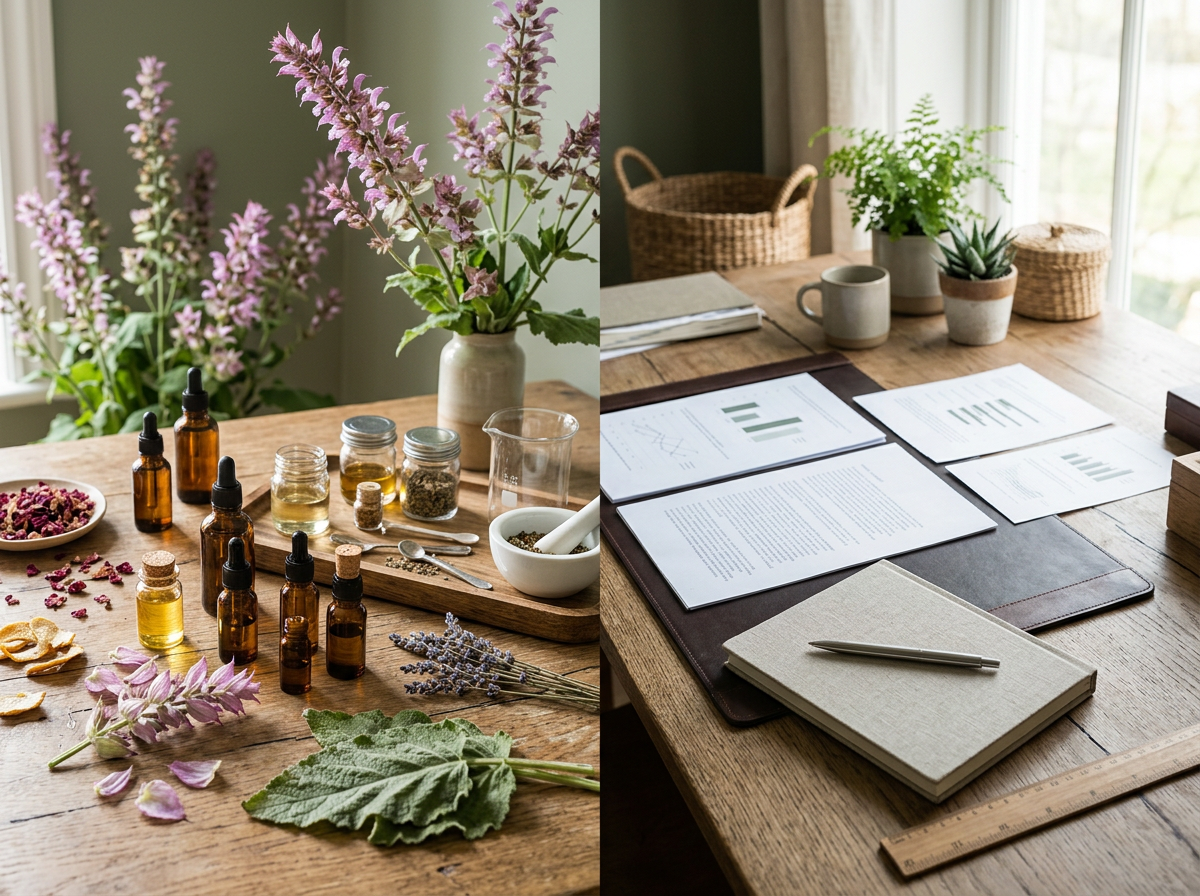
There are several frankincense species, and they are not all the same. Boswellia carterii from East Africa tends toward a bright, almost citrusy, clean resin character. Boswellia sacra, harvested in Oman, is considered among the most prized, with an intensely resinous, cool, slightly green quality. Boswellia frereana brings a dry, woody, almost pencil-shaving character with little of the classic resin sweetness.
Boswellia serrata is different. Sourced from the Indian subcontinent, primarily from the dry forests of Rajasthan and Madhya Pradesh, it is steam distilled from the resin of trees that have been tapped for centuries. Its aroma is warmer and rounder than its East African or Omani relatives. Think balsamic softness, a faint spiciness, and a quietly sweet, almost vanilla-adjacent drydown. It is less austere than sacra, less sharp than carterii.
That warmth is exactly why serrata pairs so well with clary sage. Where the sage brings the floral-herbaceous brightness, serrata provides a steady, resinous base note that keeps the blend grounded without competing for attention. They support each other gracefully.
You can explore our sourced frankincense serrata essential oil if you are ready to start building this blend at home.
The Signature Blend: Clary Sage and Frankincense Serrata Evening Oil
This blend is designed as a personal fragrance oil for evening rituals: a bedtime wind-down roll-on, a slow-evening body oil, or a quiet moment of stillness before sleep. The formulation works beautifully in a diffuser as well, though the dilution ratio will differ. Instructions for both are included below.
Ingredients
| Ingredient | Drops | Approximate Volume | Role in Blend |
|---|---|---|---|
| Clary sage essential oil | 8 drops | 0.27 ml | Heart and floral-herbal core |
| Frankincense serrata essential oil | 6 drops | 0.20 ml | Base note, resinous depth |
| Lavender essential oil | 5 drops | 0.17 ml | Soft floral bridge |
| Bergamot essential oil (FCF) | 3 drops | 0.10 ml | Top note, gentle lift |
| Jojoba oil (carrier) | N/A | 30 ml (1 fl oz) | Carrier, skin application |
Total essential oil concentration: approximately 1.5% dilution. This falls within the general guideline for daily-use body and facial oils for adults. For a diffuser version, use only the essential oils (no carrier) and follow your diffuser manufacturer's guidance, typically 6 to 10 drops per fill.
Note on bergamot: Use only FCF (furocoumarin-free) bergamot in any blend applied to skin. Standard bergamot contains bergapten, which can cause photosensitivity. FCF variants have this compound removed and are safe for topical use.
Equipment
- One 30 ml (1 fl oz) dark glass bottle, amber or cobalt
- A small glass dropper or pipette
- A clean label and pen
- A blending strip or cotton pad (optional, for aroma testing before you commit)
Step-by-Step Instructions
- Test first. Drop each oil onto a separate blending strip. Hold them together and let the aroma evolve for 30 seconds. This gives you a preview before blending. Adjust ratios if any single note feels dominant to your nose.
- Add the carrier. Pour the 30 ml of jojoba oil into your glass bottle first. Jojoba has an extremely long shelf life and a neutral, slightly waxy scent that will not compete with the blend.
- Layer the essential oils from heaviest to lightest. Begin with frankincense serrata (6 drops), then clary sage (8 drops), then lavender (5 drops), then bergamot (3 drops). Adding in this order lets each note settle into the carrier before the next arrives.
- Cap and gently roll. Do not shake vigorously. A slow rolling motion between your palms blends the oils without introducing excess air, which can accelerate oxidation.
- Rest the blend. Set the bottle aside in a cool, dark spot for 24 to 48 hours. Essential oil blends often smell noticeably different after this resting period, as the aromatic molecules have time to interact. Many blenders find the result is rounder and more cohesive after the wait.
- Label clearly. Include the blend name, date, and a list of all ingredients. This is especially important if you share your space with others who may have sensitivities.
Dilution Ratios, Patch Testing, and Safety Notes
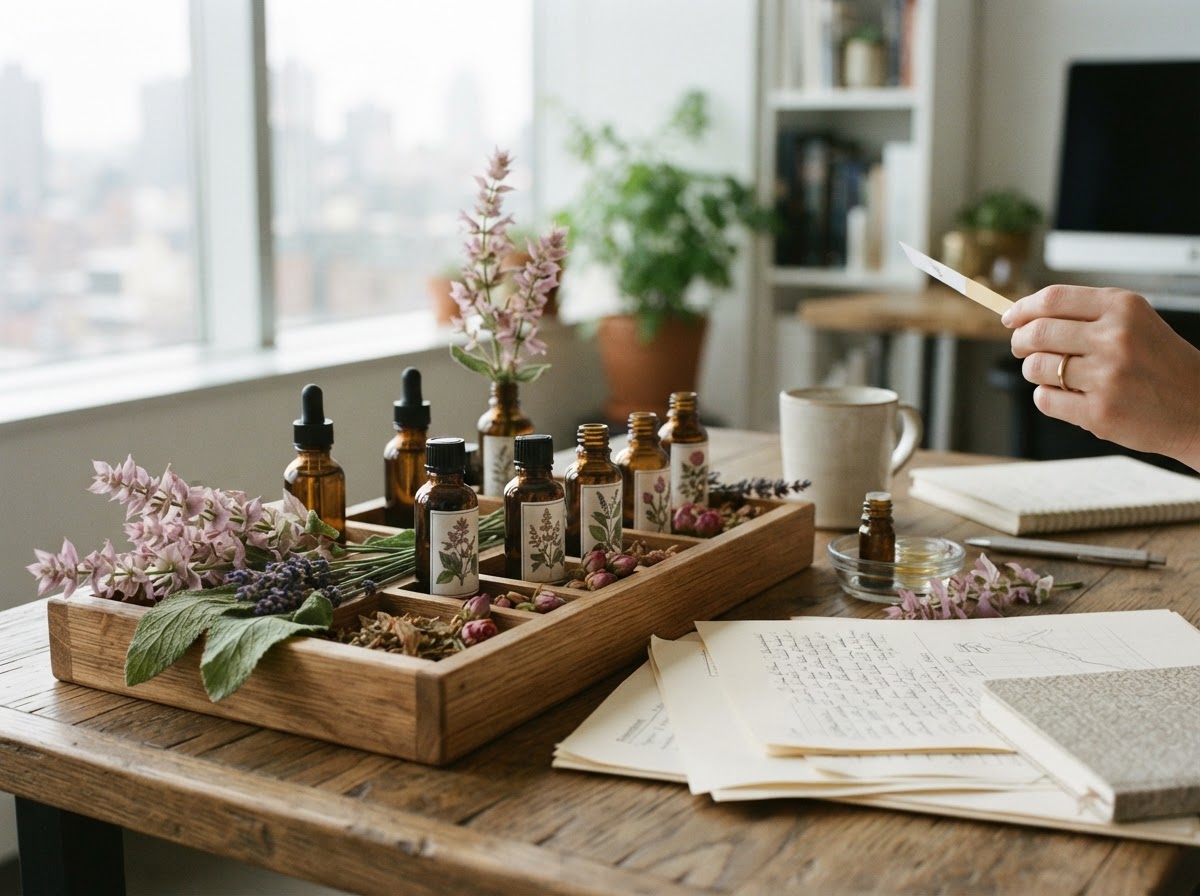
The 1.5% dilution in this recipe is appropriate for adults applying the oil to larger body areas such as arms, legs, and the torso. For anyone with sensitive skin, consider reducing to 1% (approximately 12 drops of combined essential oil per 30 ml of carrier). A separate guide on how to dilute clary sage oil with carrier oils and ratios covers this topic in much more detail.
Patch testing steps:
- Apply a small amount of the finished, diluted blend to the inside of your wrist or inner elbow.
- Leave it uncovered for 24 hours.
- If you notice any redness, itching, or discomfort, discontinue use and wash the area with mild soap and water.
Additional notes to keep in mind:
- Avoid use during pregnancy. Clary sage is a potent oil and is generally not recommended during pregnancy. Consult your healthcare provider before use.
- Keep all essential oils away from children and pets.
- Do not apply near the eyes or mucous membranes.
- Clary sage may intensify the effects of alcohol. Avoid using it in the hours surrounding alcohol consumption.
- If you are on any prescription medication or managing a health condition, speak with a qualified healthcare provider before incorporating essential oils into your routine.
Storage and Shelf Life
Store your finished blend in a cool, dark location, away from direct sunlight and heat. A drawer, cabinet, or dedicated essential oil box all work well. Jojoba oil is technically a liquid wax and is notably resistant to going rancid, which makes it an excellent carrier for blends you plan to keep for a while.
Expect a shelf life of 12 to 18 months for this blend when stored properly. The citrus note from bergamot may fade somewhat before the other oils do. If the blend starts to smell flat, sharp, or noticeably different from when you made it, it is time to start fresh.
Label the bottle with the creation date so you never have to guess.
Variations Worth Exploring
Variation 1: Woodsy Evenings (Diffuser Blend)
For a diffuser version that leans warmer and more resinous, try 3 drops clary sage, 3 drops frankincense serrata, 2 drops cedarwood (Atlas or Virginian), and 1 drop vetiver. The vetiver note is powerful, so start with just one drop and adjust to your preference. This creates a slow, contemplative atmosphere well suited to a quiet evening at home. For more diffuser ideas, browse this collection of clary sage diffuser blends for a relaxing evening atmosphere.
Variation 2: Floral Forward Body Oil
If the clary sage and lavender blend aspect of the original recipe is what appeals most to you, this variation leans into that pairing more fully. Use 6 drops clary sage, 8 drops lavender, 4 drops frankincense serrata, and 2 drops rose absolute in 30 ml of sweet almond oil. Rose absolute is thick and may need slight warming between your palms before it flows from the dropper. The result is lush, soft, and noticeably more floral than the original.
Variation 3: Spiced Resin Roll-On
For something a little bolder and more complex, swap bergamot for black pepper and add a single drop of cardamom. Use 8 drops clary sage, 7 drops frankincense serrata, 4 drops lavender, 2 drops black pepper, and 1 drop cardamom in 30 ml of jojoba. The spice notes add a dry warmth that makes this variation feel more suited to cooler months, when something with a little more presence is welcome.
Building Your Own Clary Sage Blends
The most important rule in blending is that your nose is the final authority. Aroma wheels and pairing guides, including this one, are starting points. They give you a framework, a shared vocabulary, and a few shortcuts. But the oils you enjoy wearing or diffusing are the ones that belong in your blends.
Clary sage rewards patience. It is an oil that benefits from companions rather than going it alone. Whether you build outward from the clary sage and lavender blend classic or venture into deeper resinous territory with frankincense serrata, there is a version of this oil that suits your space, your evenings, and your preferred way of winding down.
Start with the signature recipe above. Adjust one element at a time. Keep notes. The blend you land on will be yours in a way no premixed commercial fragrance ever quite manages to be.