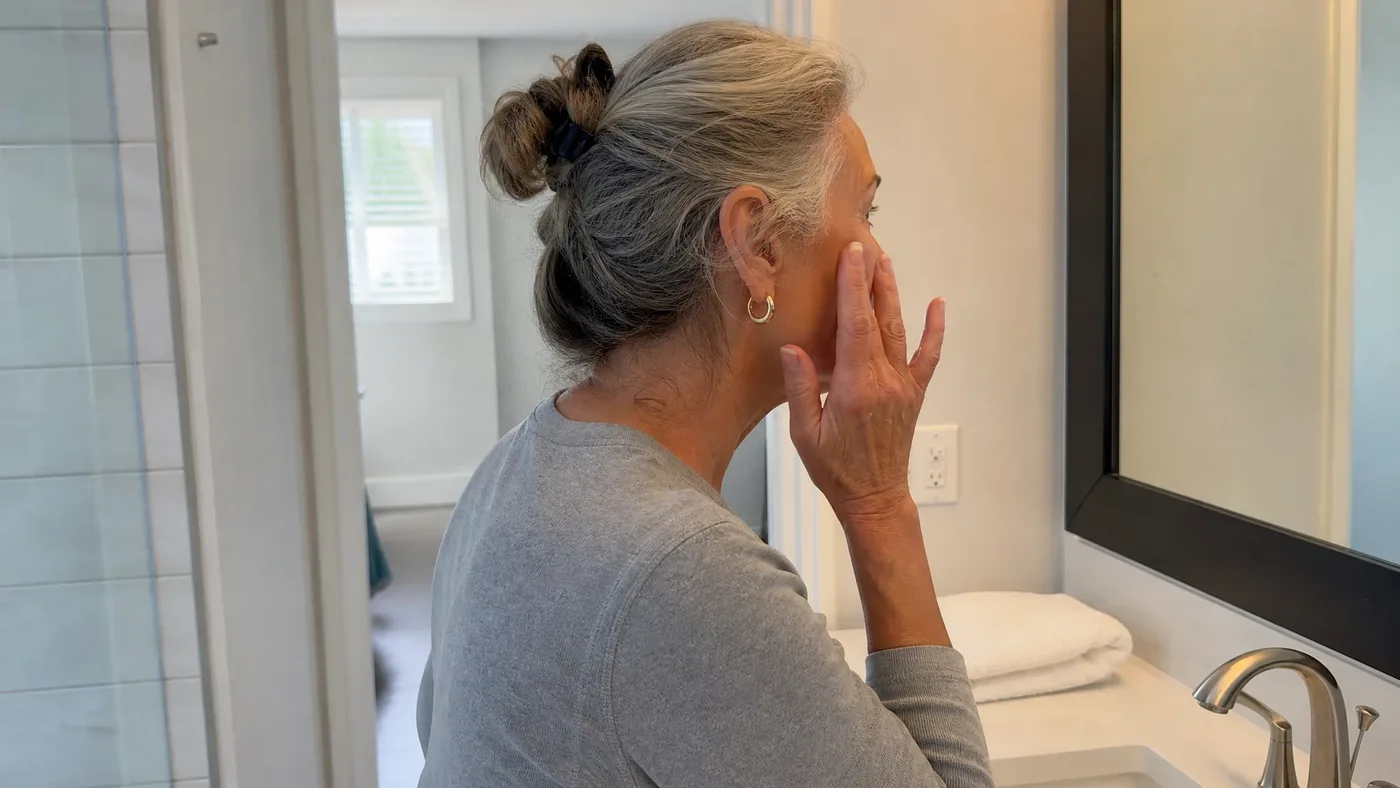
Clary Sage Oil in a Face Oil: Scent, Feel and Dilution
A face oil is a small, quiet ritual: a few drops warmed between the palms, pressed onto skin at the end of the day. If clary sage is the scent you want in that ritual, it is a lovely choice. It smells sweet and dry, softly herbal, with nutty, tea-like undertones, a very different mood from the bright florals most people reach for first.

Clary Sage Essential Oil
Our own Clary Sage Essential Oil, in sizes from 0.5 oz to bulk.
From $19.99
Shop Now →What each ingredient is doing
In a homemade face oil, the carrier oil does the work of moisturizing; the essential oil is there for aroma. That distinction keeps expectations honest. Our clary sage oil is a fragrance ingredient, and we make no skin aging claims for it. Studies that ask whether something changes skin aging are demanding ones. The best-known example tested daily broad-spectrum sunscreen: in 903 Australian adults followed for 4.5 years, skin aging was 24% less in the daily sunscreen group than in the group using it occasionally (Hughes et al., Annals of Internal Medicine, 2013). That is the kind of evidence it takes, and a scented oil is not in that league. Our oil is not a sunscreen and offers no sun protection.
What a well-made face oil can honestly offer is a skin feel and a scent you enjoy using. That is plenty reason to bring clary sage into the picture.
Getting the dilution right for your face
Facial skin is thinner and more reactive than the skin on your arms, so the dilution should be lower. Our general guidance is 0.5% to 2% in a carrier oil with a patch test first. For the face, we would stay at the low end of that. The Tisserand Institute guidance lists 0.5% to 1.2% for facial cosmetics and 0.2% to 1% for sensitive or impaired skin, and describes its ranges as guidelines to start low from, not rules. Tisserand's own retail page for clary sage suggests up to 2 drops per 10 ml for the face (Tisserand, clary sage).
Here is the arithmetic, using the common rough convention of 20 drops to a millilitre (real drops vary):
| Carrier oil | 0.5% | 1% |
|---|---|---|
| 10 ml | 0.05 ml, about 1 drop | 0.1 ml, about 2 drops |
| 30 ml | 0.15 ml, about 3 drops | 0.3 ml, about 6 drops |
The carrier is the part you will buy elsewhere, since we sell the essential oil on its own. Our dilution guide covers choosing one, and our patch test guide shows how to check a small area first.
A few cautions that matter for faces
Keep the oil away from the eye area. The European Food Safety Authority, assessing clary sage oil as a feed additive, advised that it be treated as an irritant to skin and eyes and as a dermal and respiratory sensitiser (EFSA FEEDAP Panel, 2024). A low dilution and a patch test are the sensible response, not a reason to avoid the oil.
If you already use a prescription skin product, ask your pharmacist or dermatologist before adding a scented oil, because a new ingredient can make it harder to tell what caused any irritation. We avoid clary sage during pregnancy (see our pregnancy article), and we say it is not the oil to reach for before driving. If your skin has reacted to fragrance before, a dermatologist or allergist is the right person to ask.
For more on skin in general, our clary sage and skin article goes further. Choose clary sage for the way it smells and for the quiet it brings to an evening routine, and keep the dilution gentle.
Clary Sage Essential Oil
Clary Sage Essential Oil from our own shop, in sizes from 0.5 oz to bulk.
From $19.99
Shop Now →Sources & Further Reading
- Hughes MC et al., 2013. Sunscreen and prevention of skin aging, a randomized trial. Ann Intern Med. pubmed.ncbi.nlm.nih.gov/23732711/
- Tisserand Institute. Dilution of essential oils. tisserandinstitute.org/dilution-essential-oils/
- Tisserand. Clary sage essential oil. www.tisserand.com/products/clary-sage-essential-oil
- EFSA FEEDAP Panel, 2024. Clary sage (Salvia sclarea) essential oil as a feed additive. EFSA J 22(11):e9016. pmc.ncbi.nlm.nih.gov/articles/PMC11561422/