A Clary Sage Oil Buyer's Guide for Soap and Candle Makers
If you make soap or candles for a living, or even just for a busy Etsy shop, you already know that clary sage oil is a strange one to source well. The scent is herbaceous, faintly floral, a little tea-like, and it behaves differently depending on where it was grown and how it was distilled. Two bottles labeled "clary sage oil" can smell noticeably different, cure differently in cold process soap, and throw scent at completely different intensities in a candle. That variability is exactly why sourcing matters more here than it does for a simple, consistent oil like lavender.
This guide walks through what separates a dependable clary sage oil for soap making supplier from one that will leave you guessing batch to batch, what to actually look for on a certificate of analysis, and how to weigh price against quality when you're buying essential oil for cosmetic products at any real production volume. We'll also flag the red flags that tend to bite new soap and candle makers the hardest.
What to Look For: Quality Indicators
Quality in clary sage oil isn't abstract. It shows up in specific, checkable details, and a supplier who is confident in their oil will hand these over without you having to ask twice.
Botanical Name and Plant Part
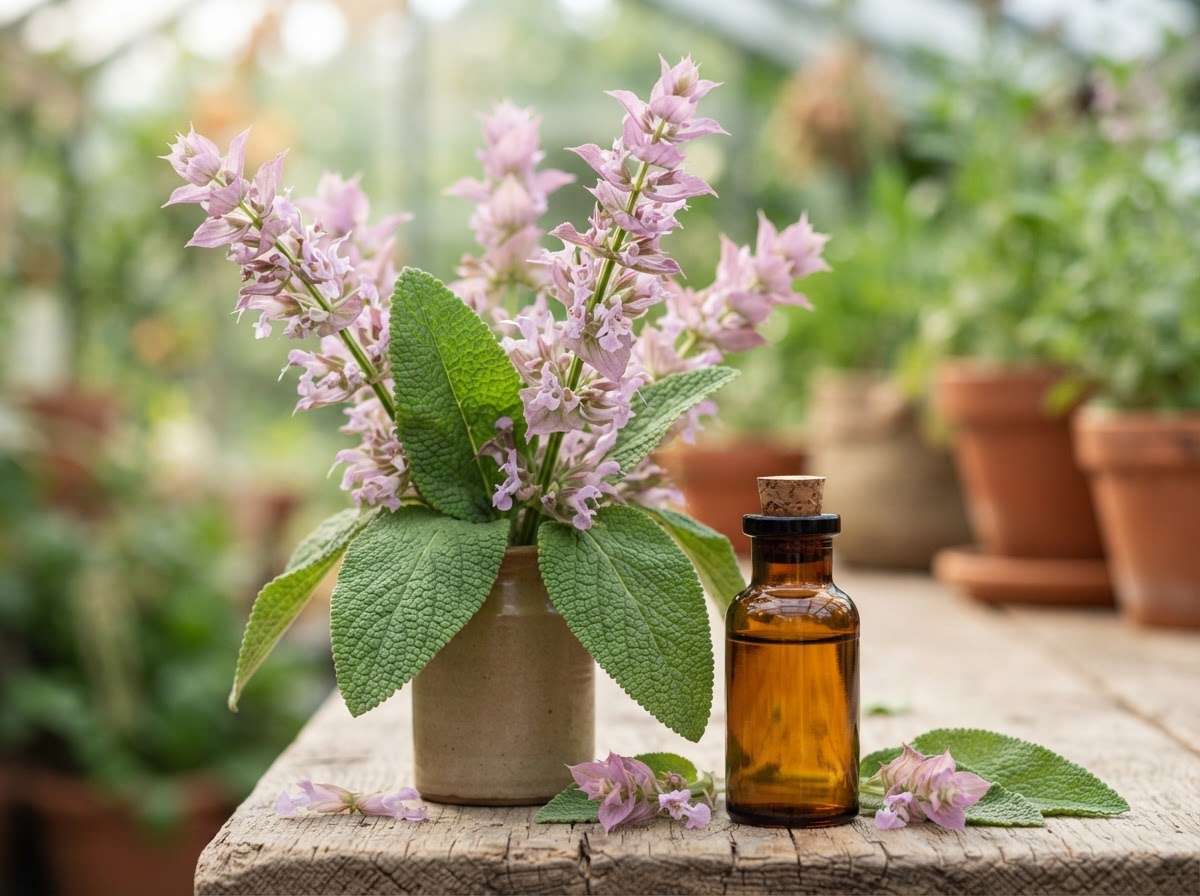
The label should read Salvia sclarea, flowering tops. That's the standard commercial source for clary sage oil, and any listing that's vague about species or skips the botanical name entirely is worth passing on. This isn't a case where a close cousin will do; blends and other Salvia species smell and perform differently in finished products.
Extraction Method
Clary sage oil is produced almost exclusively by steam distillation of the flowering tops and leaves. A reputable supplier will state this outright. If a listing describes a solvent-extracted "absolute" but prices and markets it identically to steam-distilled oil, treat that as a mismatch worth asking about. Absolutes carry trace solvent residue and are formulated for fine fragrance work, not typically for soap or candle use at scale.
Certificate of Analysis (COA)
This is the single most useful document in the whole buying process, and it's worth understanding what a real clary sage oil COA actually contains:
- GC/MS report: A gas chromatography and mass spectrometry breakdown listing the oil's major constituents (linalyl acetate and linalool are typically the dominant compounds in clary sage) with percentages. This confirms the oil is what it claims to be, not a diluted or adulterated stand-in.
- Batch or lot number: Tied to the specific bottle or drum you're buying, not a generic "representative" report from a different harvest.
- Country of origin and harvest date: Clary sage is grown commercially in France, Russia, Bulgaria, and the United States, among other regions, and origin genuinely affects scent character.
- Physical properties: Specific gravity, refractive index, and optical rotation, which labs use to spot check consistency batch to batch.
If a supplier can only offer a generic "typical" COA that isn't tied to your actual lot, ask directly whether batch-specific testing is available. For anyone buying essential oil for cosmetic products in volume, this single habit prevents most sourcing headaches before they start.
Purity Claims, and Why "100% Pure" Isn't Enough on Its Own
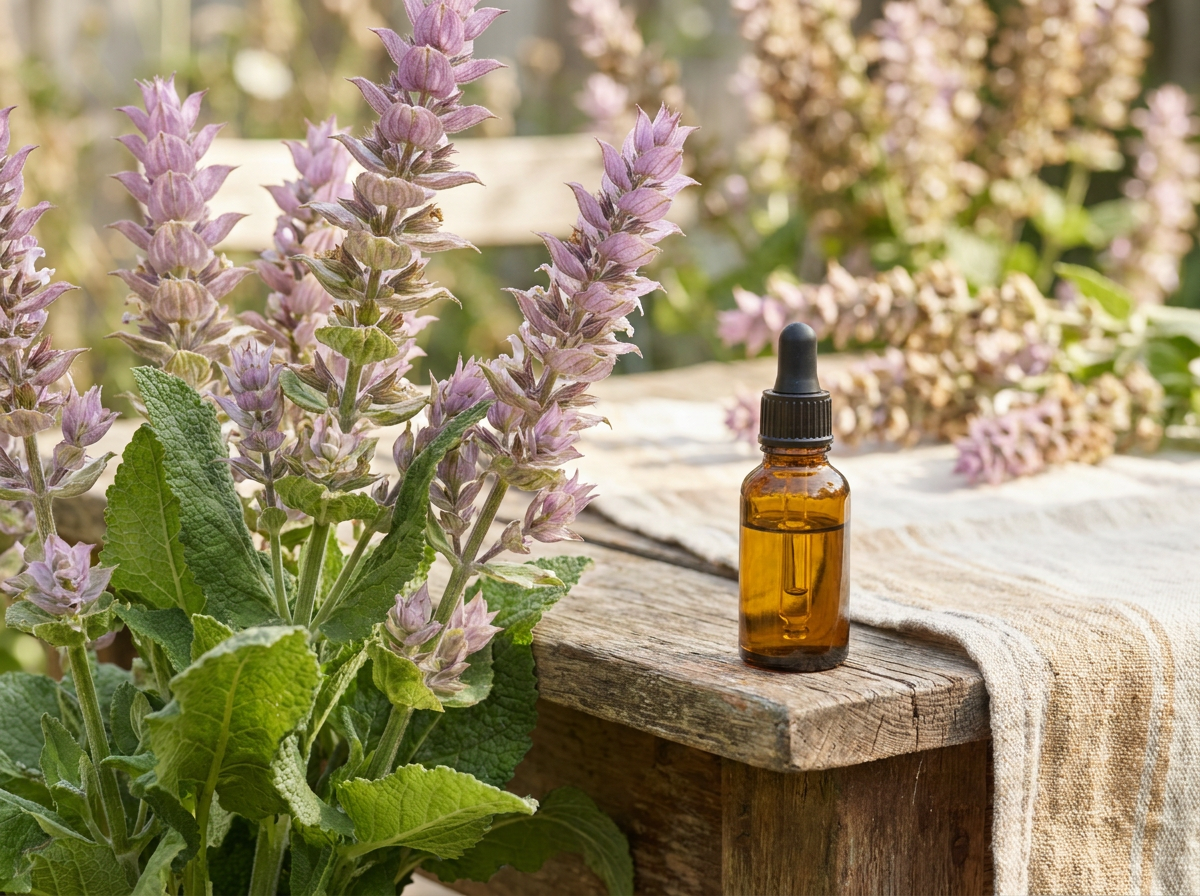
Almost every bottle on the market says "100% pure" somewhere on the label. That phrase alone tells you nothing verifiable. What matters is whether the claim is backed by a lab document you can actually read. A supplier who pairs the purity claim with a real GC/MS report is telling you something. A supplier who only offers the phrase is asking you to take their word for it.
Key Features to Compare Across Suppliers
Once you've confirmed a supplier meets the basics above, the next step is comparing the details that actually affect your finished products.
| Feature | Why It Matters for Soap | Why It Matters for Candles |
|---|---|---|
| Origin and harvest | Affects scent nuance and how the note ages during cure | Affects top-note character before it's masked by wax and other notes in a blend |
| Flash point | Less critical; soap is a cold or warm process | Clary sage oil's flash point (roughly 180 to 200°F depending on batch) matters for hot-pour safety and for choosing pour temperature |
| Viscosity and color | Affects how evenly the oil disperses in cold process trace | Affects clarity if used in clear gel or container candles |
| Packaging (amber glass vs. plastic vs. bulk drum) | Amber glass protects against light degradation for smaller batches; bulk drums make sense at higher volume | Same, plus consider whether the supplier ships in aluminum for larger orders, which some fragrance houses prefer for stability |
| Minimum order quantity | Small-batch makers need 1oz to 16oz options without a huge markup | Candle makers scaling past a few hundred units need pound or kilogram pricing to stay profitable |
| Fragrance load guidance | Helpful but not essential; soap makers usually work from their own trace testing | Very useful; a supplier who can tell you the oil's typical usage rate in wax saves a lot of trial batches |
For candle makers specifically, ask suppliers directly whether they have data on scent throw and any interaction notes with soy, coconut, or paraffin wax bases. Clary sage oil for candle makers is a slightly trickier note to work with than something like sweet orange, because its herbaceous character can read as muted at low percentages and a little sharp at high ones. A supplier who understands candle formulation, not just bottling essential oils, will have opinions here worth listening to.
Top Picks at Different Price Points
Pricing for clary sage oil varies quite a bit depending on origin, packaging, and how much documentation the supplier invests in. Here's roughly how the market breaks down.
Budget Tier
At the lower end, you'll typically find blended-origin oils sold in large format (16oz and up) with minimal individual batch documentation, often a generic safety data sheet rather than a lot-specific COA. These can work for testing formulations or for makers who are still finding their audience, but treat the scent consistency as a moving target. If you go this route, order small first and keep a sample from every batch so you can compare against the next shipment before committing to a large order.
Mid-Range Tier
This is where most working soap and candle businesses land. Expect single-origin sourcing (often French or Bulgarian), a batch-specific COA provided on request or posted per lot, and amber glass or lined bulk packaging. Pricing here reflects the added testing and traceability without the premium markup of small-batch artisanal harvests. This tier is generally the sweet spot for buying essential oil for cosmetic products at a scale where consistency actually shows up in customer reviews.
Premium Tier
At the top end, you're paying for single-harvest or estate-sourced oil, often with a distiller relationship the supplier can describe in detail (which farm, which growing season, sometimes even which distillation run). These oils tend to have a more layered scent profile and are popular with makers building a fragrance-forward, small-batch brand story. The Gentler Sage's own clary sage oil sits in this tier: single-origin, lot-tested, and sold in both small sample sizes for formulators and bulk sizes for production runs, with the COA available for every lot we carry.
Red Flags to Avoid
A few warning signs come up again and again in supplier listings, and they're worth screening for before you commit to an order.
- No botanical name listed. If the listing just says "clary sage oil" with no Salvia sclarea anywhere, that's a basic transparency gap.
- Suspiciously low pricing relative to the category. Clary sage is a moderately labor-intensive crop to distill. Pricing far below the going market rate often means dilution with a carrier oil or a cheaper filler, neither of which will be disclosed on the label.
- Stock photography instead of the actual product. If every listing photo is a generic dropper bottle with a flower overlay rather than the supplier's own packaging, that's often a sign of a reseller with no direct relationship to the distiller.
- No COA available on request. Any supplier unwilling to share testing documentation for a cosmetic-use oil is a supplier you should be cautious about, especially if you're formulating products you plan to sell.
- Inconsistent scent between orders with no explanation. Some batch variation is normal and even expected with a naturally sourced oil. A supplier who can't or won't explain why a new batch smells noticeably different is one to watch closely.
- Vague or missing storage guidance. Clary sage oil oxidizes over time like most essential oils. A supplier who doesn't mention shelf life, storage temperature, or the value of amber glass hasn't thought much about their customers' actual use case.
Where to Buy
For soap and candle makers, the sourcing landscape generally breaks into three channels.
Direct from a Specialty Distiller or Botanical Supplier
This is usually the best option for consistency and documentation. You're buying from a company whose whole business is essential oils, which means COAs, batch tracking, and origin transparency tend to be built into how they operate rather than bolted on. Expect to pay a bit more than marketplace pricing, but the tradeoff is fewer surprises batch to batch.
Wholesale Marketplaces
Bulk ingredient marketplaces can offer competitive pricing at volume, particularly useful once your production has scaled past hobbyist quantities. The tradeoff is that quality varies enormously by individual seller on these platforms, so the due diligence steps above (COA request, botanical name check, sample order before bulk) matter even more here than with a dedicated supplier.
General Marketplace Listings
Broad consumer marketplaces carry clary sage oil too, but listings here are aimed primarily at home aromatherapy use rather than cosmetic production, and documentation is often thin. This channel can work for testing a formulation idea on a small scale, but it's rarely the right long-term source for a production business that needs batch consistency and reliable COAs.
A Simple Pre-Order Checklist
Before placing a production order with a new clary sage oil for soap making supplier, run through this quick list:
- Confirm the botanical name is Salvia sclarea and the extraction method is steam distillation.
- Request a lot-specific GC/MS report, not a generic "typical" COA.
- Ask about country of origin and harvest year.
- Order a small sample size first, even if you plan to buy in bulk eventually.
- Test the sample in your actual formulation (soap trace, wax pour) before committing to a large order.
- Keep a labeled reference sample of every batch you use, so you can compare against future shipments.
- Always dilute properly and patch test any new oil source in a small finished-product batch before scaling production, and if you have any questions about a specific ingredient's suitability for your formulation, consult a qualified chemist or formulator.
Clary sage oil rewards a little extra diligence at the sourcing stage. It's not a commodity oil where every bottle performs identically, and the makers who get the best, most repeatable results tend to be the ones who treat their supplier relationship like part of the formulation process rather than an afterthought. A batch-tested, well-documented oil costs a little more up front, but it saves far more in reformulation time, wasted wax, and inconsistent customer experience down the line.